nGI supports decoding barcodes.
Several one-dimensional and two-dimensional symbologies are supported. Here is an alphabetical list of the supported symbologies:
| symbology | dimensionality | link to description |
|---|---|---|
| Aztec | 2D | http://en.wikipedia.org/wiki/Aztec_Code |
| Code39 | 1D | http://en.wikipedia.org/wiki/Code_39 |
| Code93 | 1D | http://en.wikipedia.org/wiki/Cod3_93 |
| Code128 | 1D | http://en.wikipedia.org/wiki/Code_128 |
| Data Matrix | 2D | http://en.wikipedia.org/wiki/Data_Matrix |
| EAN | 1D | http://en.wikipedia.org/wiki/International_Article_Number_(EAN) |
| ITF | 1D | http://en.wikipedia.org/wiki/ITF-14 |
| PDF417 | 1D stacked | http://en.wikipedia.org/wiki/PDF417 |
| QR Code | 2D | http://en.wikipedia.org/wiki/QR_code |
| UPC | 1D | http://en.wikipedia.org/wiki/Universal_Product_Code |
The decoder has a configuration parameter, which you can select the symbologies that you want to decode. By default, all of the supported symbologies are enabled.

The decoder expects one code in the image that is given. It expects the code to sit roughly in the middle and for one-dimensional codes the scanning is horizontal. This means that the bars should be vertical. A virtual horizontal scan line that sits in the middle should cross the whole code.
Here is an example of a perfectly positioned code:
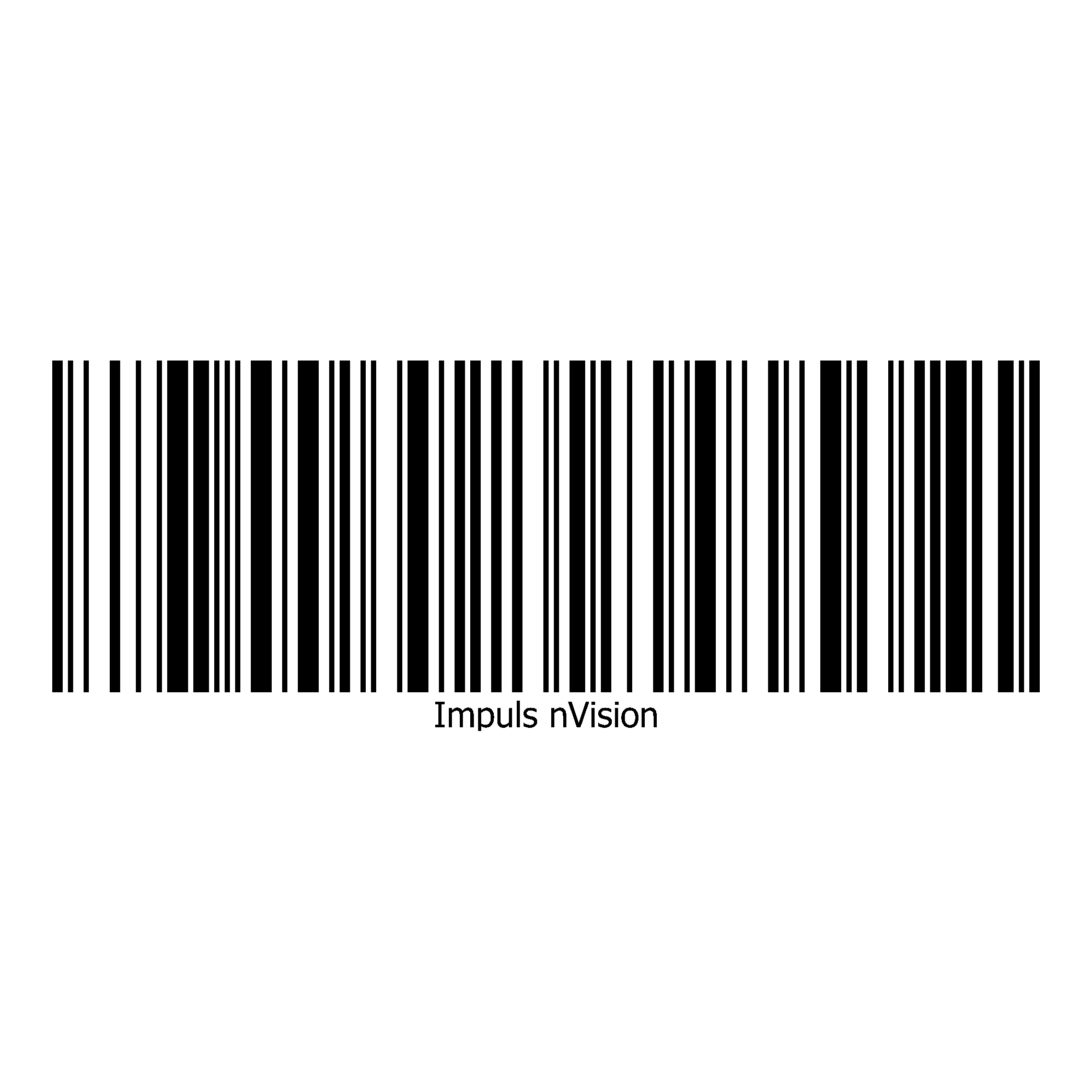
The code in the following image cannot be decoded:

The code in the following image does not decode, because the virtual scan line does not cross the whole code:

The barcode decoder does not do anything else to locate a barcode. If your circumstances are different, you can use other preprocessing tools, to bring the barcode in a suitable position for the decoder. If the barcode is not properly rotated, you can use the rotation tools. If the barcode is not properly located, you can use the crop tool to cut out the relevant portion for the barcode decoder. If contrast or brightness are not sufficient, you can use image preprocessing.
Here is an example that shows how you would use the decoder:
#include <ngi_image.h>
#include <ngi_rgb.h>
#include <ngi_locator.h>
#include <ngi_view.h>
#include <ngi_widget_image.h>
#include <ngi_display.h>
#include <ngi_iostream.h>
#include <ngi_barcode_algorithm.h>
#include <ngi_demo_main.h>

using namespace ngi;

typedef image<rgb<unsigned char> > image_type;
typedef locator<image_type::value_type> locator_type;
typedef view<locator_type> view_type;
typedef widget_image<view_type> widget_type;
typedef display<widget_type> display_type;

int main(int argc, char* argv[])
{
    image_type img = import_image<image_type>(TEXT("2dcode_suite\\datamatrix\\DataMatrix 10x10 012345.png"));
    display_type wnd(img.get_view(), TEXT("Barcode"));

    ngi::barcode_decoder configuration;

    auto barcodes = ngi::decode_barcode(img.get_view(), configuration);

    ngi::cout << barcodes.size() << TEXT(" barcode(s) found");
    ngi::cout << std::endl;
    for (auto bc = barcodes.begin(); bc != barcodes.end(); ++bc)
    {
        ngi::cout << TEXT("[ ") << bc->get_text() << TEXT(" ] ");
        auto position = bc->get_position();
        for (auto p = position.begin(); p != position.end(); ++p)
            ngi::cout << TEXT("(") << p->get_x() << TEXT(" ") << p->get_y() << TEXT(") ");
        ngi::cout << bc->get_symbology_name();
        ngi::cout << std::endl;
    }

    run_message_loop();

    return 0;
}